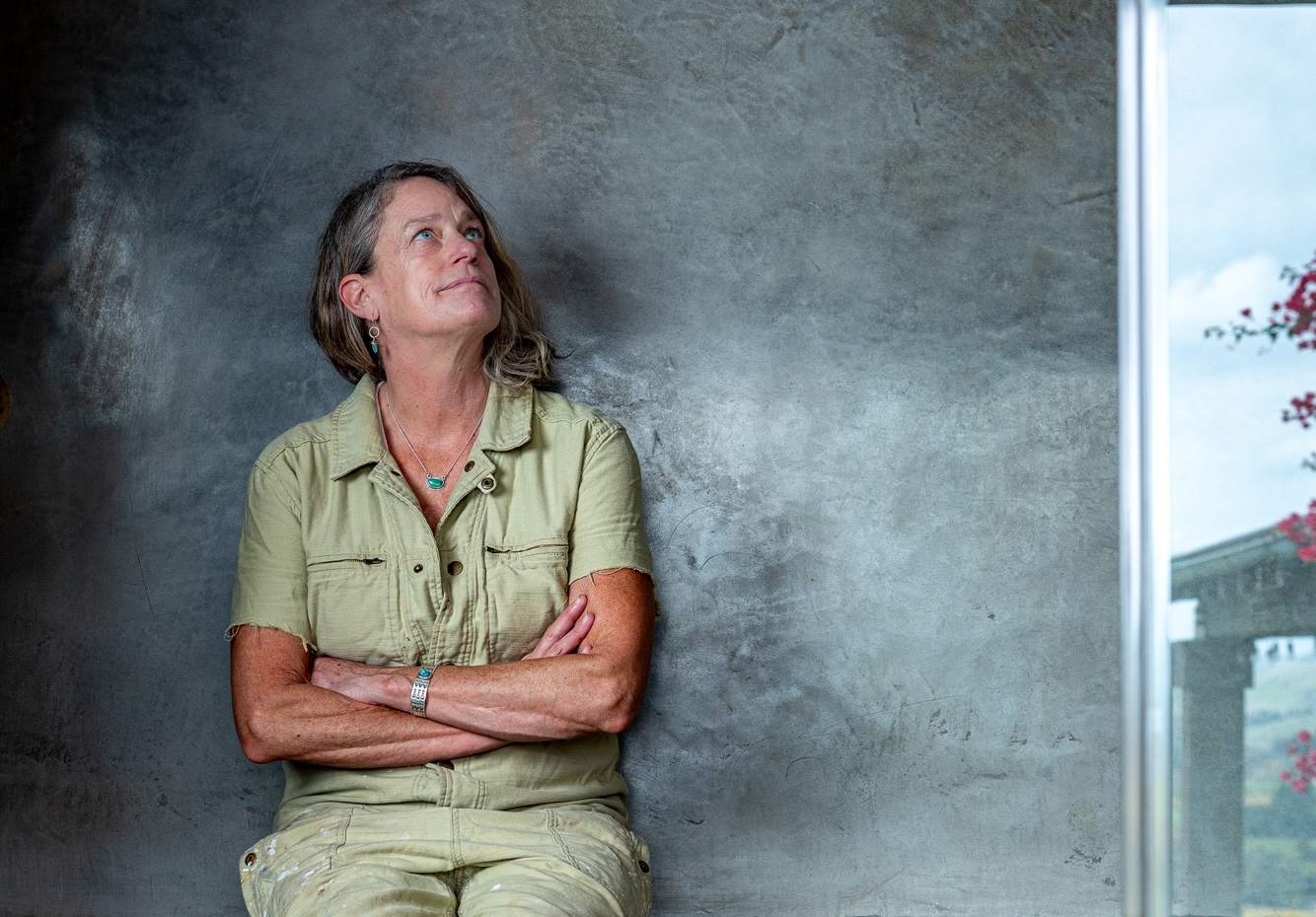
Chuck Shenberger - C.J.S. Plastering
.png)

Chuck Shenberger’s relationship with plaster began early. Raised in Chester County, Pennsylvania, he grew up around the trade, working alongside his father, who ran a plastering and stucco business. What started as summer work gradually became a full-time path, and by 2009, he had fully entered the trades.

Much of that early learning happened on job sites, often in smaller, less visible areas of a project. Closets, stairwells, and tight spaces became his first training grounds. His father’s approach was hands-on: watch closely, ask questions, and learn by doing. As he progressed, that often meant being given larger sections of work.
At times, that included taking on ceiling work and other more demanding applications, which required a higher level of control and confidence. Those moments pushed him to rely on his training, ask more questions, and gradually expand what he was capable of.
He also spent years working on the stucco side of the business alongside his father and crew, an experience that shaped both his tool skills and work ethic. The physical demands of that work, along with the pace of job sites, laid the foundation for how he approaches plaster today.

One technique he worked with extensively was lime and gauging, a traditional method of mixing finish plaster by hand. The process involves creating lime putty, putting it on a board, forming it into a ring, adding water, then sprinkling in gauging plaster and mixing everything by hand. Over time, that repetition built a sense of the importance of paying close attention to the material. That foundation continues to inform how he works today.
These plaster finishes were always applied as a step toward the final finish, but not the final result itself. The surfaces were typically painted, and the variation and depth created by application and troweling were no longer visible.
“It always bothered me,” he said. “You put all that detail into it, and then it just gets buried.”
That realization stayed with him.

A shift came after he traveled to California and worked with his uncle, who also ran a plaster business but focused more on decorative finishes. There, he was introduced to pigmented plasters and finish work where the material remained exposed. It was the first time he saw plaster used as the final surface rather than something meant to be covered.
One moment in particular stood out. Seeing his uncle’s home, finished with plaster in a way he hadn’t encountered before, expanded his understanding of what the material could do. It was an early realization of how broad the craft really is, and how much there was still to learn.
The California environment also played a role in that shift. Working in a different region meant exposure to different expectations, clients, and levels of openness to materials. Designers were more familiar with decorative finishes, and there was often more flexibility to experiment with how plaster could be used.
That experience reinforced something he had already begun to feel. Plaster had the potential to be more than a paint-ready surface. It could stand on its own.
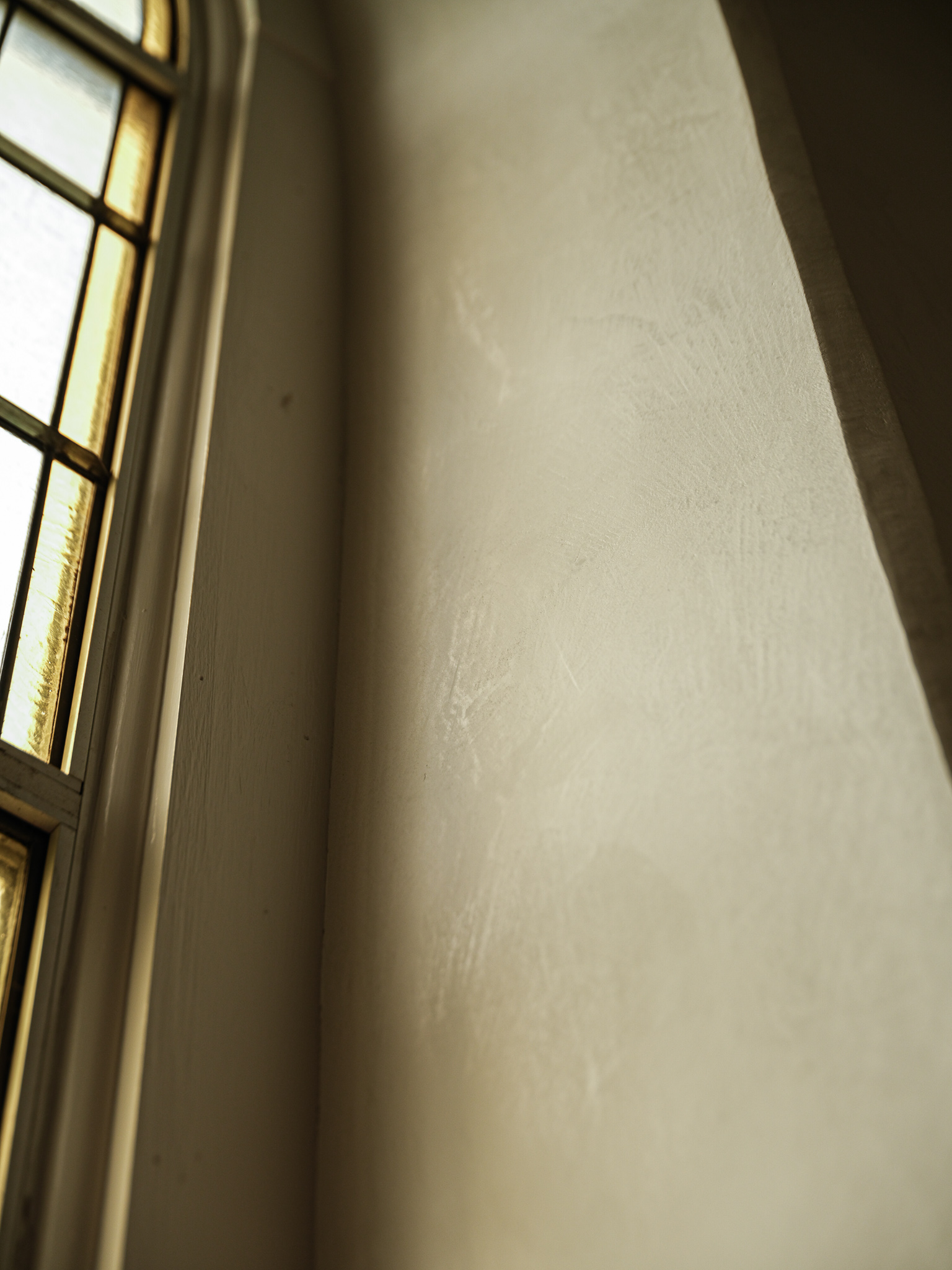
From there, he began exploring lime-based finishes more seriously, including Venetian plasters such as marmorino and grassello. Much of that learning happened through trial and repetition, studying materials and application techniques, testing them, and working through the results over time. That process continues today. Ongoing experimentation allows him to understand the strengths and limitations of each material.
Working across stucco, gypsum, and lime have all taught different lessons. Stucco builds endurance through physically demanding work, while Gypsum requires speed, with little room for hesitation once mixed. Lime requires something different, as each movement remains visible in the final surface.
That contrast between materials continues to influence how he works, allowing him to move between them with a clearer understanding of their differences and possibilities.
Around 2019, his father’s business began to expand beyond plaster and stucco. After taking over another company, the operation grew to include roofing, siding, and window work, creating a broader construction business alongside the original plaster and stucco work.
It was at that point that Chuck began to reconsider his own direction. While he had once expected to take over the business, the shift toward general construction clarified what he did and didn’t want to pursue. Rather than continuing down that path, he chose to focus exclusively on plaster.
“I don’t want to do anything that’s not plaster,” he said. “You only have one life. Why spend most of it doing something you don’t enjoy?”
From this place of honest authenticity, his business was born.

He is now in his second year running his own business centered entirely on decorative and traditional plaster finishes. His work has included fireplaces, range hoods, accent walls, and bathrooms, with larger projects beginning to come in.
Much of his work comes through designers, builders, and homeowners. Projects often begin with samples and conversations, an opportunity to explain the material and show what’s possible.
“There’s a market for it,” he said. “People are starting to understand what it is.”
For much of his early career, the work felt relatively isolated. That changed when he came across New Age Artisans while researching tadelakt (something that he kept getting asked about and finally set out to learn).
“I didn’t know many other plasterers,” he said. “Then I found all these people keeping the trade alive.”
Through the NAA community online and The Plaster Portal, he began connecting with others and gaining access to shared knowledge and techniques. It shifted how he saw his own work, not just as an individual trade, but as part of a broader community of artisans.

The focus on traditional methods and material authenticity stood out, especially in the approach to tadelakt. If he was going to learn it, he wanted to be sure it was being done in a way that stayed true to the original technique and the millennia of history behind it.
“If I was going to be learning tadelakt, I wanted to know it was the real thing,” he said.
He has since worked with several of the New Age Artisans blends, including Heritage, Classic, and tadelakt, using them across client projects and in his own home. He has also worked with all blends to create sample boards, using that process to better understand how each behaves.
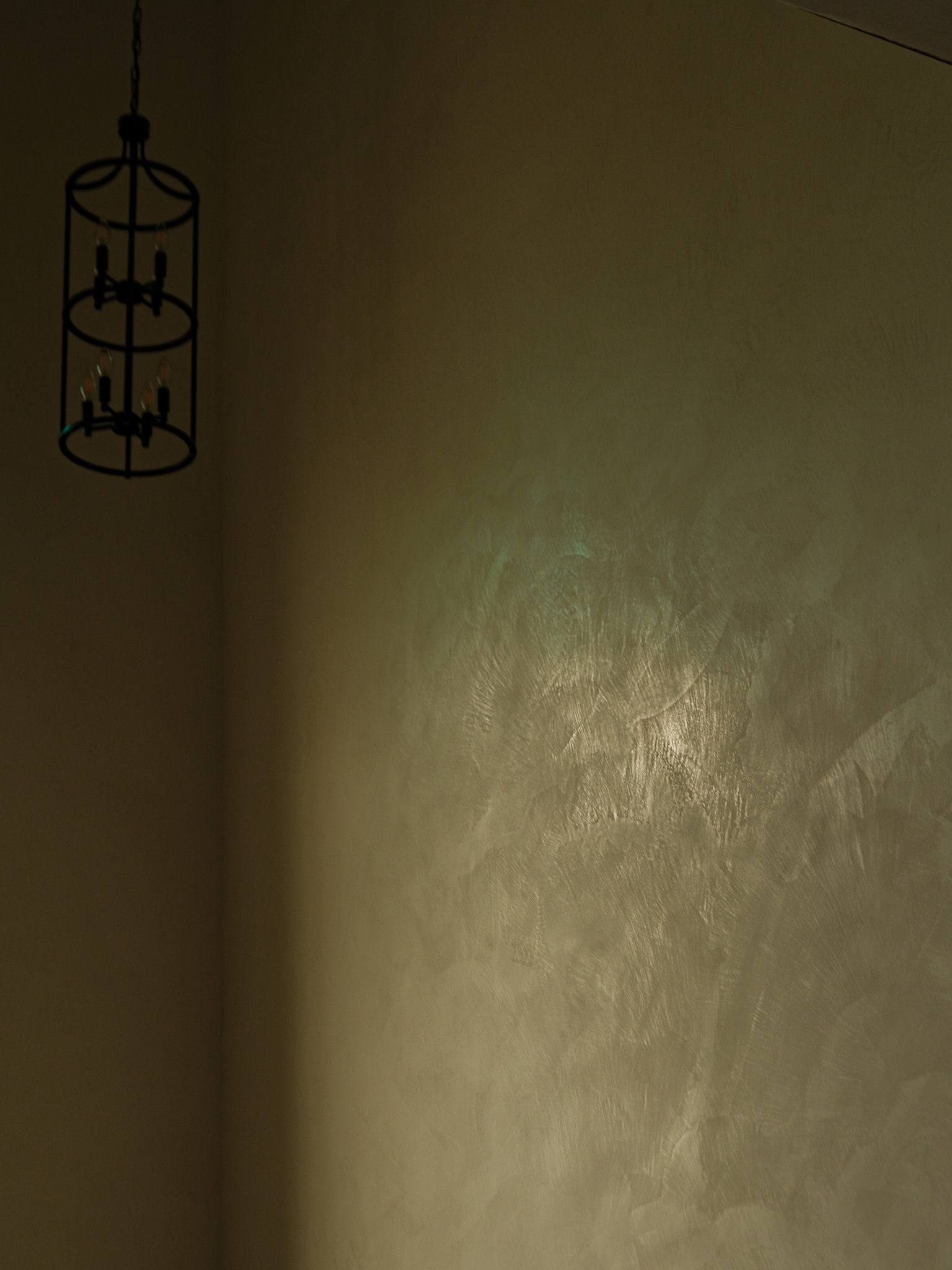
At the core of his work remains a strong interest in experimentation. He is continually testing materials, developing samples, and exploring different finishes to expand what he can offer.
“The versatility of plaster is unmatched,” he said.
That experimentation extends beyond standard applications. Over the years, he has used plaster to create a range of objects and forms, including small builds, custom pieces, and more exploratory work. Chairs, panels, lettering, and other pieces have emerged from that process, often starting as simple ideas and developing through trial and error.

Much of that work begins with preparation. Learning how to build structure with wire lath, understanding base coats, and figuring out how to support the material are all part of the process. With the right preparation, he sees very few limits to where plaster can be applied. From there, the finish becomes another layer of exploration.
At one point, he put that perspective into a simple phrase that now serves as his business slogan: “Plastering the past, present, and future.”
For him, the past is the traditional foundation, rooted in techniques used for thousands of years. The present reflects the continued relevance of those methods, with work being applied today in the same way it has been for generations. The future is open, shaped by ongoing experimentation and the belief that plaster will continue to evolve while remaining grounded in its origins.
It also reflects how he approaches the material. Rather than separating traditional techniques from newer applications, he sees value in combining them, using a traditional foundation to create work that fits within a contemporary setting.

As his business continues to develop, Chuck remains focused on building something sustainable. Rather than expanding quickly, he is focused on improving his work, building relationships, and continuing to learn.
Currently, he works alone and has mastered the solo approach, but hopes to eventually bring on an additional artisan, someone who is genuinely interested in the craft and willing to learn it as he did.
In recent months, he has seen more interest and more consistent opportunities.
“I can see something coming,” he said.
For now, his focus remains on the work itself. It’s a process, but one that continues to build meaningfully over time.
Find Chuck on Instagram: https://www.instagram.com/c.j.s._plastering/